Showing posts with label jazz. Show all posts

Tuesday, April 29, 2008

Csaba Deseo Ensemble - Behind the Csitári Mountains


In honour of my Easter trip to Budapest...


...and a loan of some suitable music from Vuk, a great viola-led piece of central European folklore.

Csaba Deseo Ensemble - Behind the Csitári Mountains - Hungarian Jazz Anthology (Tom Wieland) - 1991

Monday, April 28, 2008

Khaliq Al-Rouf & Salaam - Malcolm, The Call


Joyous music. Dance and spin and look to the heavens, it doesn't matter if you fall over.

Khaliq Al-Rouf & Salaam - Malcolm, The Call - The Elephant Trot Dance - 1979

Sunday, January 13, 2008

Tribe

I was asked to write an article for a local magazine with no other brief than that it should be 800 words, and follow the theme of the issue: Tribe. Readers of this blog might be able to guess the angle I took...


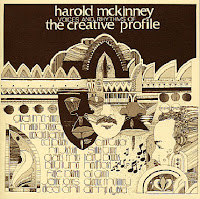


Detroit, Michigan. Motor City. The 313. Fewer than one million inhabitants but perhaps the richest and most influential musical heritage of any city of that size; a heritage of which sadly many of even its inhabitants are unaware. The home of Stevie, of Arethra, of Motown. The home of techno, from the first wave originators Juan Atkins, Kevin Saunderson and Derrick May to the all-conquering Carl Craig. The home, more recently, to distinctive new hip hop and soul from Slum Village, from Dwele, the Platinum Pied Pipers, Amp Fiddler and the late J Dilla. The home of Moodymann. A city always innovating and always creating, defying definitions. Eminem and the White Stripes also call it theirs.

It’s not surprising that Detroit was home to Tribe Records, set up in 1972 by Wendell Harrison, an established jazzman then teaching at Detroit’s Metro Arts Complex, and Phil Ranelin, a session trombonist with people like Stevie Wonder. A label important on the one hand because of the excellence of the music it released, and on the other because of the progressive, collective, political and above all optimistic way it was done.

The label was founded with the express intention of giving local musicians control of the marketing and distribution of their own records. A revolutionary approach also taken by Strata East in New York and by the Art Ensemble of Chicago around the same time. This self-determination was an active expression of, and contribution to, the cultural and racial changes that were then going on across the US.

“Who’s to blame. That the brothers are running a game on each other. Who’s ashamed, that we’re burning ourselves in a flame and no other. Can’t you see that the war is brought on by another. Can’t you see it’s a game that’s played on all the brothers. When the ones that do it to you turn you on yourself, when you fight a war and end up on the shelf. What a way to treat the people. No jobs but lies and prices rise. You fight a war now broke the law. When are we to wake up brothers?” (Doug Hammond, Wake Up Brothers).

To create another mouthpiece the label started a magazine with the same name. It carried articles on economics, business, history, politics, education and culture. Saxophonists took photos, pianists wrote reviews while cover artists played percussion. “The Tribe is an extension of the tribes in the villages of Africa…There were no superstars; just people and collectively all the people of the village played a vital role in shaping that culture”. This inclusive approach contrasted with the infamous straightjacket of Gordy’s Motown hit machine, which itself had a surprising role in the Tribe sound.

As Wendell Harrison recounts, “Motown Records had just relocated to California - and there were a lot of Motown musicians who wanted to do something, so we used a lot of the rhythm section guys. They had their R&B flavour, but they also had knowledge of the jazz, so the music became R&B on the bottom and bebop on the top. That was organic, and people liked it. We still had to sell records and we wanted to appeal to a market. We discovered there were a lot of people who like that old Motown feeling, so even though we had that bottom, we could still play what we wanted to on the top - that helped people digest it. That was better than just playing straight ahead.”

This Tribe sound reflected the inclusive politics – embracing funk, gospel, soul, spoken improvisation; jazz; perpetual percussion; amplified guitar and vocals. There is always a groove. It’s exciting, veering from radiophonic workshop style effects, shimmering 70s post-bop and barrio-flavoured instrumentals, through spiritual meditations and sweetly earnest revolutionary folk – all combined in an intoxicating mix of experimentation, grooves and, above all, hope.

By the time Tribe stopped trading in 1977, its five years had seen only about ten releases. But while unknown to all but jazz heads, it still provides a compelling vision. While today ‘tribes’ are identities defined by a certain cut of denim or fringe, the Tribe family brought a synthetic approach, a ‘mixed bag’, that drew strength from diversity and, even more importantly, still gave a shit.

“Pure music must portray our way of life. Our music is reflecting more so than ever before, the stress, tension and discord that is taking place within our communities along with the harmonious things happening.”

"The time is now, for unity among the people! The time is now, for all men to be able to control their own destinies! The time is now, for oppression, racism, greed, hate and poverty to end! The time is now, for revolution!" (Phil Ranelin, The Time is Now).

“How hard it is for us to be for real. In seeking every moment for a thrill. We must begin to realise the truth. That we have got to stand for what we do.” (Doug Hammond, For Real).

**********

There are links to a lot of this great music at http://pharaohs-dance.blogspot.com/, but here are a few tracks to get you started.

Marcus Belgrave - Space Odyssey - Gemini II - 1974
Doug Hammond - For Real - Reflections In The Sea Of Nurnen - 1975
Harold McKinney - Ode To Africa - Voices and Rhythms of the Creative Profile - 1974
Mixed Bag - Shark - The Mixed Bag's First Album - 1976

And see this from an earlier post...
Doug Hammond & David Durrah - Wake Up Brothers - Reflections in the Sea of Nurnen - 1975

Monday, January 7, 2008

Sun Ra - That's How I Feel


A slow-burning gem from the interplanetary cosmiguru meandering inexorably and quite beautifully between the outer galaxies.

Sun Ra - That's How I Feel - Lanquidity - 1978

Friday, December 21, 2007

Max Roach - Equipoise


Stanley Cowell's tune, with Gary Bartz on sax and Charles Tolliver on trumpet plus a much newer, wobblier take from Ninja Tune's Dwight Trible.

Max Roach - Equipoise - Members Don't Git Weary - 1968
Dwight Trible & The Life Force Trio feat. Sa-Ra - Equipoise - Equipoise CDS - 2005

Wednesday, September 26, 2007

Daniel Givens - Mandala / Mural


You've got to admire people who do their own thing and Daniel Givens certainly does that. Here's one of the more accessible tunes from the Chicago producer's 2000 album. If a mandala is a generic term for a pattern, used in meditation, that represents a microcosm of the universe from a human perspective, then this slow score certainly fits the bill.

Daniel Givens - Mandala / Mural - Age - 2000

Sunday, September 2, 2007

Herbie Mann & The Bill Evans Trio - Nirvana


Slowing it right down for Sunday evening, a lovely piece which, to me, sounds better with the slightly distorted recording.

Herbie Mann & The Bill Evans Trio - Nirvana - Nirvana - 1961

Monday, August 27, 2007

Gary Bartz Ntu Troop - Uhuru Sasa


Gary Bartz and Andy Bey doing what they do best, supported by excellent driving drumming from the under-appreciated Harold White.

Gary Bartz Ntu Troop - Uhuru Sasa - Harlem Bush Music - Uhuru - 1971

Steve Reid - Kai


Steve Reid drumming with Arthur Blythe on Sax.

Steve Reid - Kai - Rhythmatism - 1975

Sunday, July 29, 2007

Gato Barbieri - Vidala Triste


The Argie Cat singing and playing flute rather than his normal rasping sax. With a great line up, including Airto Moreira, M'tume, LLS, John Abercrombie and Stanley Clark, he creates an insidious folk drone.

Gato Barbieri - Vidala Triste - Bolivia - 1973

Tuesday, June 19, 2007

Max Roach - Garvey's Ghost


Imposing power music. The war drums are sounding and Eric Dolphy is blowing. Feel it.

Max Roach - Garvey's Ghost - Percussion Bitter Sweet - 1961

Thursday, June 14, 2007

Chick Corea & Return To Forever - You're Everything


This whole album has an interesting sound with tempos that don't normally sit with the kinds of instruments and tunes featured. It's a great line up. Stanley Clarke on bass, Joe Farrell on reeds, Airto on percussion and the instantly recognisable Flora Purim singing. The song I've chosen is the opener. Don't get too lulled by the opening - it starts to take off after 2 minutes and there's a mad rush to the finish.

Chick Corea & Return To Forever - You're Everything - Light As A Feather - 1972


Wednesday, June 13, 2007

Alice Coltrane - Turiya & Ramakrishna


This is my favourite track from the late great Alice Coltrane. 8 minutes 21 seconds of meditative calm with blue notes and shuffling percussion aplenty but strangely no harp or horns. Turiya, according to Alice in the liner notes is "a state of consciousness — the high state of Nirvana, the goal of human life". Ramakrishna, I've learned, was a 19th Century Bengali who taught the oneness of existence; the divinity of all living beings; the unity of God and the harmony of religions. Stoned teenagers dig it too.

Alice Coltrane - Turiya and Ramakrishna - Ptah the El Daoud - 1970

Friday, June 1, 2007

Gabor Szabo - An Evening In The Country


A nice bit of Bob James produced guitar from the Magyar Maestro Gabor Szabo that isn't in the slightest bit macho. That is, of course, unless you think the title is a pun (much like in Hamlet when the Prince asks Ophelia: "Do you think I meant country matters?").

Gabor Szabo - An Evening In The Country - Macho - 1975

Wednesday, May 23, 2007

Naima


No, not America's next top model. Nor the trade association of North American manufacturers of fibre glass, rock wool and slag wool insulation products for that matter. No I'm talking about the amazing Coltrane ballad composed in 1959 for his then wife Juanita Naima Grubb. There are countless versions of this tune and I'll present a few different takes here. 4 Hero make the most out of that instantly recognisable refrain, add some of their signature strings and, for them, relatively muted beats. Carlos Santana and John McLoughlin interpret it in the style of a sleepy gondolier. McCoy Tyner's is the longest version here and, with just piano, bass and drums, it makes a great lullabye. LLS adds typically splendid spacey percussion and keyboard trills and vocals from his brother Donald (I just love his voice and wish he'd recorded more - watch out for future posts). And finally the first (and I consider the best) Coltrane recording.

4Hero - Naima - The Remix Album - 2004
Carlos Santana & Mahavishnu John McLoughlin - Naima - Love, Devotion, Surrender - 1973
McCoy Tyner - Naima - McCoy Tyner Plays John Coltrane Live at the Village Vanguard - 1997
Lonnie Liston Smith & The Cosmic Echoes - Naima - Cosmic Funk - 1974
John Coltrane - Naima - Giant Steps - 1960

Sunday, April 15, 2007

Dollar Brand - Bra Joe From Kilimanjaro


A long, long tune from the South African Dollar Brand (who later changed his name to Abdullah Ibrahim). Perfect for dozing in the sun after slightly too much good food. After a piano only opening, a bit like some climax in a Buster Keaton movie, the tune relaxes into a circular piano riff that just keeps going. There's some lovely trumpet and an easy, not contrived Eastern feeling to the whole thing. I'm sorry to say I'm not sure where I've picked up this version from. It's quite different from the version from the album with the cover above, or from the live recording also available, and I haven't ripped it from my Dad's two track record either.

Dollar Brand - Bra Joe From Kilimanjaro

Tuesday, April 10, 2007

Strings of Inner City Life


Photo taken on a recent walk around the site of the 2012 Olympics in East London.

Spreading the Word has posted the excellent live instrument 'jazz' version of Strings of Life by Chris Prommer. Go over and get yourself a copy. Remaking classic modern tunes this way is not new. The German group Re:Jazz has recorded albums full of them, including a fantastic version of Goldie's classic Inner City Life a couple years back, and Crybo's post has inspired me to put this up for you. The drum 'n' bass anthem turned into the deepest night-time vocal jazz...

Re:Jazz - Inner City Life
Goldie - Inner City Life (short single version)

Thursday, March 22, 2007

New York City


I'm off to my old stomping ground New York tomorrow, to catch up with some old friends and do a little work I guess. To keep you entertained in the meantime, a gimlet triplet of NYC greats...

Miroslav Vitous - New York City - Magical Shepherd - 1976 (booty-shaking storm trooper)
Oddysey - Native New Yorker - 12" - 1977 (opening credits of Cagney & Lacey)
Ahmad Jamal Trio - Autumn in New York - Ahmad's Blues - 1958 (super-sophisticated shuffle)